




Divers
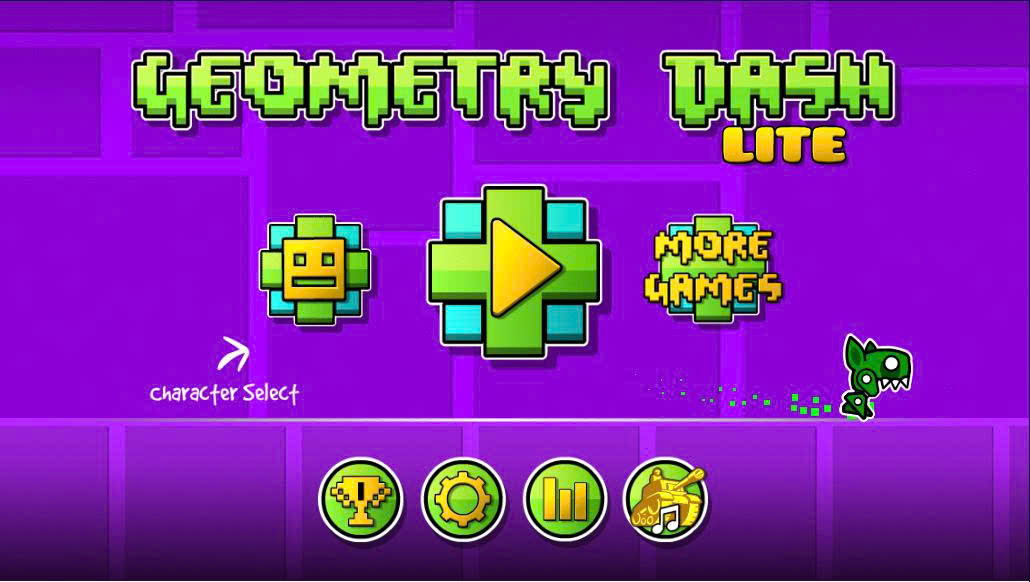
How to Enjoy a Geometry Dash “Jump” the Right Way: From First Beat to Flow State
 Du 26 au 30 septembre
 Toulouse
Maison de l'Occitanie - salle Perbosc
Gratuit !


Introduction
If you’ve ever watched someone play Geometry Dash, you might have noticed something that looks almost like dancing—small, precise jumps timed to music, with instant reactions when the screen throws a new challenge at you. That feeling is part game, part rhythm, and part problem-solving. In other words, it’s not just “press jump and hope.” It’s about experiencing a moment where timing becomes instinct.
An “interesting geometry jump” is really the experience of learning how movement and rhythm connect : you see an obstacle, predict what comes next, and then commit to a jump that matches the beat. The fun grows as your understanding grows—first you survive the section, then you start flowing through it, and eventually you feel the level “click” in a way that’s satisfying in a quiet, personal way.
In this article, I’ll walk through how to play and experience that kind of jump using Geometry Dash as the main example. Even if you’re brand new, you can enjoy the process without pressure—your goal isn’t perfection, it’s momentum.
Gameplay (What “a geometry jump” actually feels like)
Geometry Dash is built around a simple idea : you jump (and sometimes change gravity or move in other ways) when the level tells you to, usually synced to the background music. The challenge is that the game doesn’t “wait” for you. Once a pattern starts, you learn it by responding to it repeatedly.
1) Start by listening before you rush
When a new level begins, try not to focus only on the next spike or platform. Instead, listen to the rhythm. Many players notice that obstacles often align with the beat : jumps feel easier when your timing matches the music’s pulse. You don’t need perfect hearing—just notice whether the level feels like it has a steady “tick,” and let your hand follow that consistency.
2) Look for patterns, not single obstacles
An “interesting jump” is rarely just one jump. It’s usually part of a sequence : jump, land, react, then jump again. Early on, it helps to treat the level like a chain of short phrases. You don’t need to understand every visual detail at once. You can learn one segment at a time :
where you land
what you do immediately after
what changes in the rhythm or spacing
As you repeat attempts, your brain starts filling in the gaps. Eventually, the jump feels less like a reaction and more like a decision you make at the right moment.
3) Accept that practice is the real gameplay
In Geometry Dash, retries are not a failure—they’re part of the craft. Each run gives you information : you learn where your timing drifts, which transitions confuse you, and what type of obstacle you struggle with most. The “jump experience” becomes more enjoyable when you stop judging each attempt by whether you finish. Instead, judge it by what you improved :
“I got farther.”
“That section felt smoother.”
“I finally understood when to tap.”
That shift makes the learning process feel lighter and more personal.
4) Learn to commit, then adjust
A common trap for new players is hesitating mid-sequence. You might delay a jump because you’re unsure, but hesitation usually leads to being late. A better approach is : commit to the beat, then correct at the next landing point. If you’re consistently slightly early or slightly late, you can recalibrate by observing where your landings end up relative to the pattern.
In practice, that’s how the “interesting jump” transforms : your body learns the timing, and your mind learns the shape of the challenge.
Tips (How to make jumps feel satisfying)
1) Use short goals
Instead of thinking, “I need to beat the level,” try : “I want to make it through this one jump sequence.” You’ll naturally improve because you’ll repeat the same micro-skill many times. When you succeed at a small goal, your confidence rises—not in a bragging way, but in a practical way. You start trusting your ability to learn.
2) Watch for transition points
Most players lose progress not in the hardest obstacle itself, but at the moment right before it—where the level changes mode, spacing, or timing. If you notice you keep failing at similar “entry moments,” focus your practice on the landing that leads into that section. Once that entry is consistent, the rest often becomes easier than you expected.
3) Keep your inputs calm
Your hands might start moving fast when you panic. But fast doesn’t always mean accurate. Try keeping your timing steady and your reactions deliberate. If you’re over-tapping or randomly tapping, you may be chasing luck rather than rhythm. A calmer input rhythm usually produces more predictable results.
4) Train your “landing awareness”
Pay attention to where you land and how the level flows right after. In Geometry Dash, landings are like punctuation marks. If you can recognize what kind of punctuation comes next—short pause, immediate jump, or quick succession—you’ll predict patterns more reliably. That prediction is the core of enjoying an interesting jump. The game becomes less “survival” and more “communication.”
5) Replay sections you already passed (yes, really)
Sometimes you’ll notice that a part you already cleared still feels clunky. That’s a clue that you’re passing through by force rather than understanding. By replaying, you can refine your timing. You’re not doing it to prove anything—you’re doing it to make the experience smoother and more fun.
6) Try different levels to build comfort
If one level style feels brutal, try another that has a similar rhythm style or speed. Comfort matters because the more familiar the movement patterns are, the more mental energy you can spend on reading the next sequence.
Conclusion
Playing Geometry Dash for an interesting geometry jump is about more than clearing obstacles. It’s about learning how timing, rhythm, and attention work together—until your jumps feel like they belong to the music instead of fighting against it. At first, you’ll likely die often. That’s normal. Each attempt teaches your timing what to do next.
So enjoy the process : listen for the pulse, look for patterns, commit to the beat, and celebrate small improvements. Eventually, you’ll experience those moments where a sequence flows—where you land, react, and jump as if you already knew the level’s language. And that’s the real reward : not showing off, but discovering how satisfying it can be to become fluent in a game’s rhythm.
If you want, tell me your current difficulty level (or what part you get stuck on), and I can suggest a simple practice approach tailored to that exact kind of jump.
Site web : https://geometrydash-pc.com/
Publié par Melodie Ortiz
Maison de l'Occitanie - salle Perbosc, Toulouse
11 rue Malcousinat
31000 Toulouse